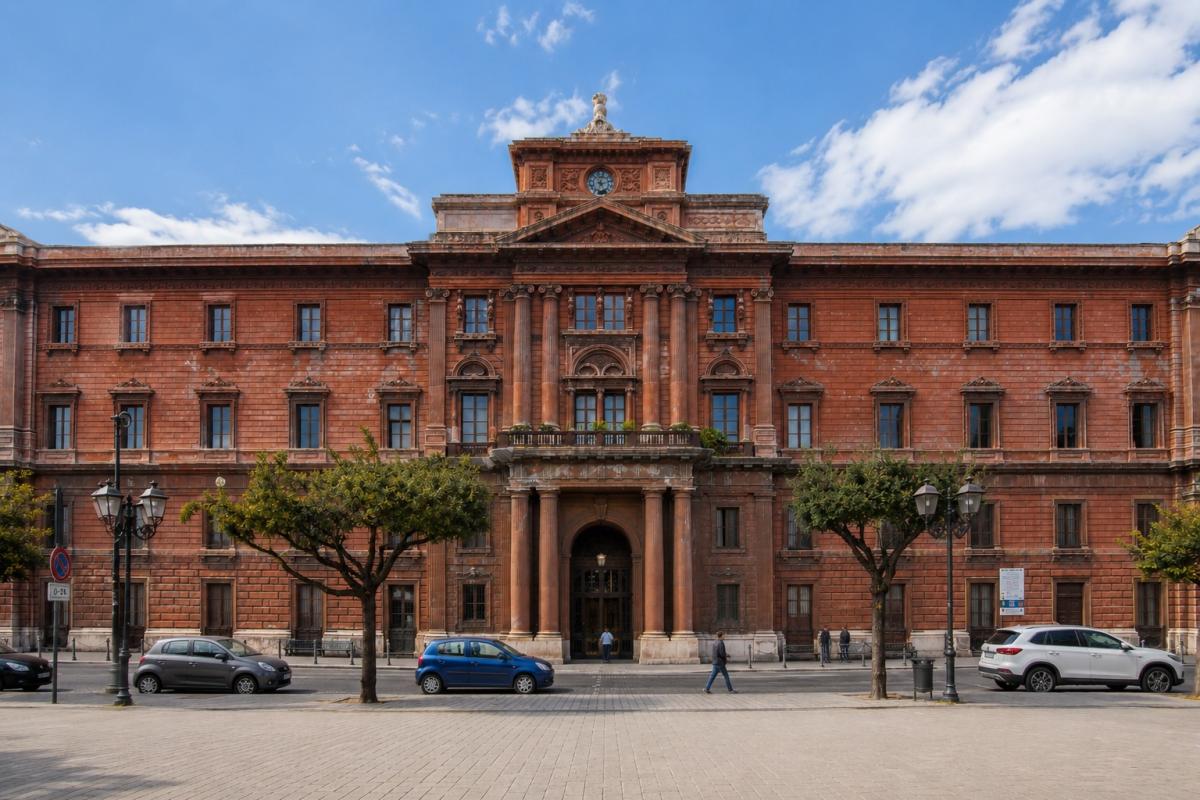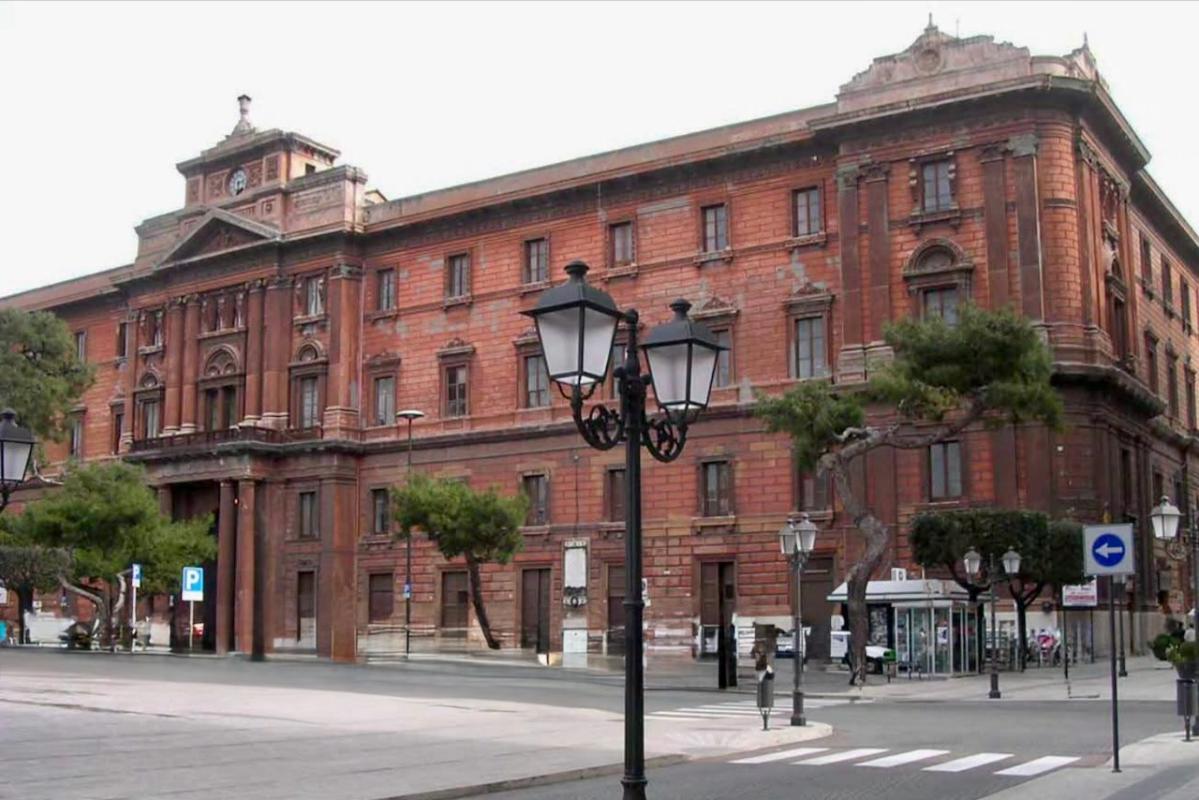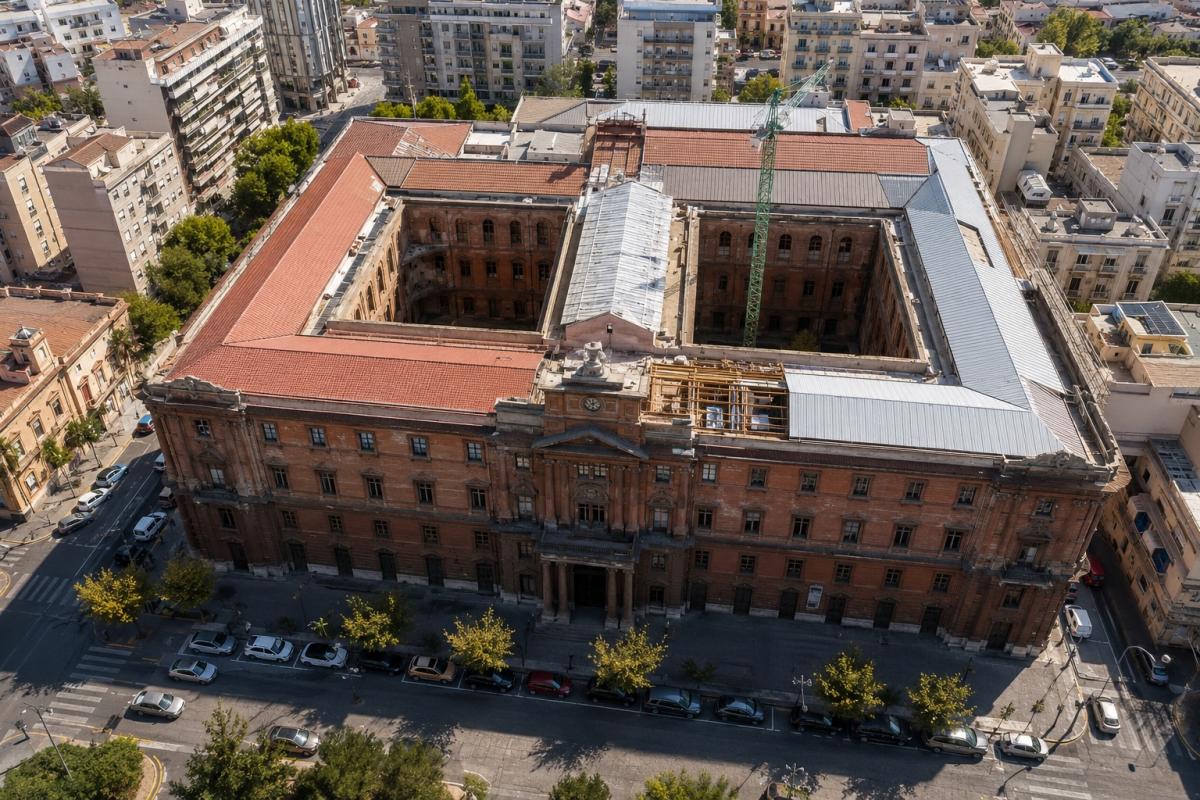
Palazzo Archita, traditionally known as the Palace of the Offices, is one of the iconic buildings in the Umbertino district of Taranto. It is located between Piazza Garibaldi and Piazza Archita, with its main façade aligned with the Swing Bridge, in a central position that has made it a visual and urban reference point of the modern city. Its construction was ordered in 1787 by Ferdinand IV of Bourbon: the original project envisioned a large orphanage for impoverished children and the orphans of military personnel....Read more
Palazzo Archita, traditionally known as the Palace of the Offices, is one of the iconic buildings in the Umbertino district of Taranto. It is located between Piazza Garibaldi and Piazza Archita, with its main façade aligned with the Swing Bridge, in a central position that has made it a visual and urban reference point of the modern city. Its construction was ordered in 1787 by Ferdinand IV of Bourbon: the original project envisioned a large orphanage for impoverished children and the orphans of military personnel. The chosen area, once connected to the ancient Agora, was used by Archbishop Giuseppe Capocelatro for public events and shows. The construction, which began at the end of the eighteenth century, suffered long delays due to the political events of 1799 and subsequent changes in government; the building was finally inaugurated in 1896. Once completed, the palace's purpose evolved: it hosted public offices, the Court, the Nautical School, meteorological and geophysical observatories, and various educational institutions. Among these, the Archita Classic Lyceum stood out, being one of the oldest in Puglia, attended by Aldo Moro between 1926 and 1934, when he graduated from classical studies in Taranto. The palace, therefore, holds significant cultural, civil, and educational value in the city's memory. The architecture features a sober, monumental, and neoclassical style, with influences from the eighteenth-century Umbertino style. The façade is constructed with strict symmetries: rows of windows, pilasters, a large Doric frieze, and a triangular pediment topped with a mechanical clock provide balance and solemnity to the whole. Through its scale and style, the building influenced the planning of the streets and the architectural image of the Borgo Nuovo. Today, Palazzo Archita no longer consistently serves the educational, judicial, and administrative functions it once did. The building is temporarily closed and awaits the completion of restoration and repurposing works. However, it remains a primary identity asset for Taranto, a testament to Bourbon history, the nineteenth-century expansion of the city, and its institutional and cultural life.
Read less