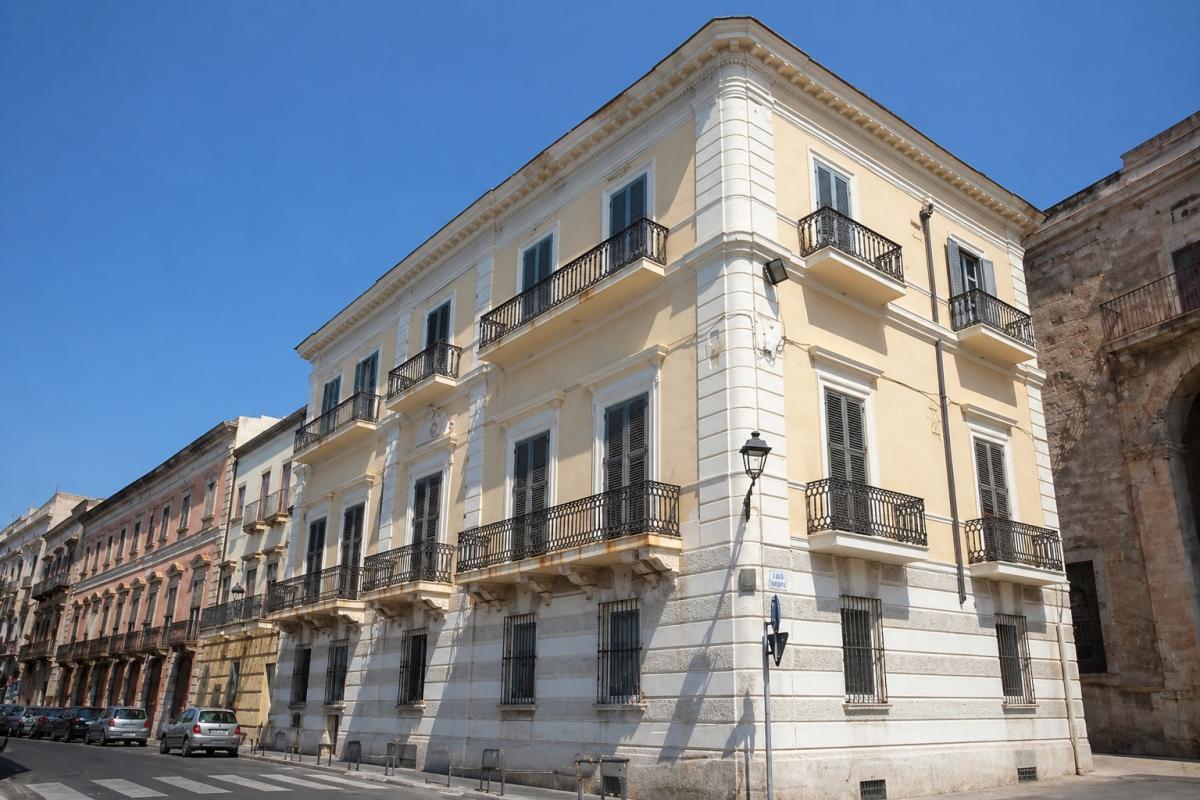
Palazzo Stola is a historic building located in the ancient center of Taranto, at the beginning of Via Paisiello, beyond Largo Latagliata. The street was formerly known as Via delle Fogge, due to the presence of numerous spaces dedicated to artisanal and productive activities. The palace contributes to the urban scenery of the street with its façade, which was characterized between the seventeenth and eighteenth centuries by the residences of the aristocratic families of Taranto. The complex houses a noble floor of particular artistic interest....Read more
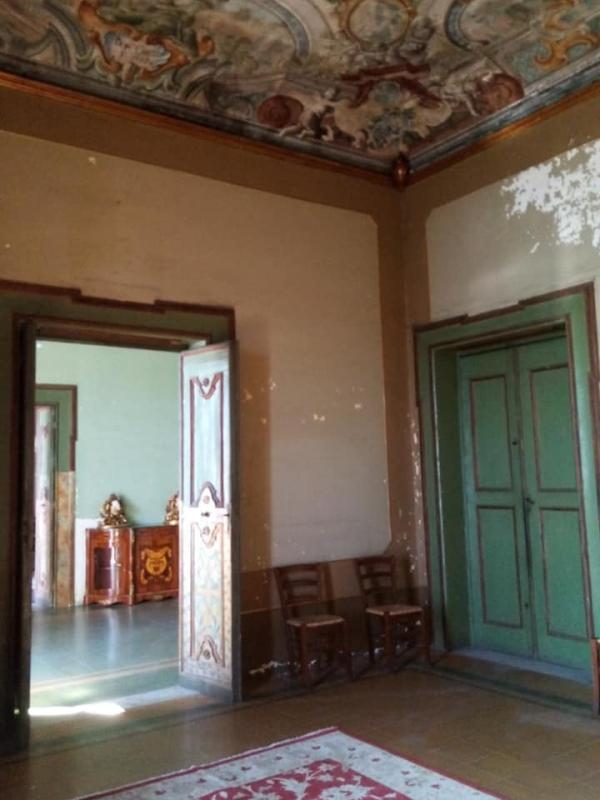
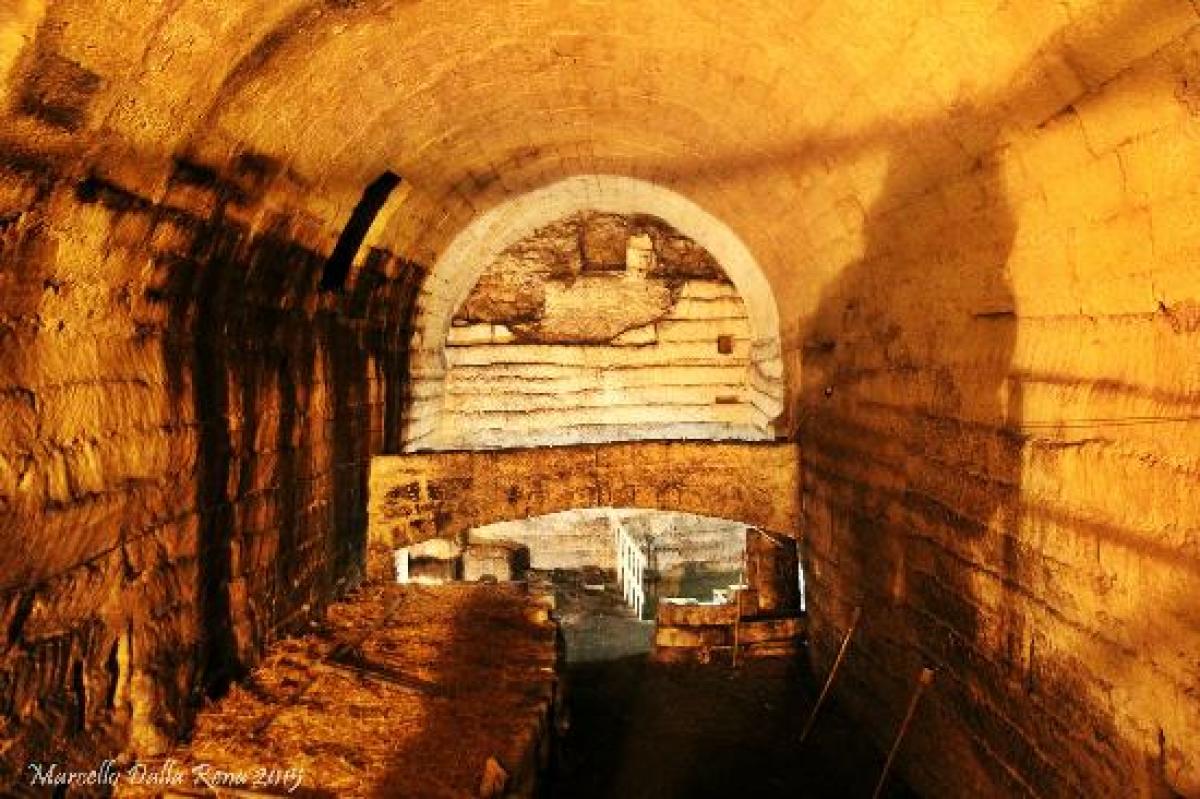
Palazzo Stola is a historic building located in the ancient center of Taranto, at the beginning of Via Paisiello, beyond Largo Latagliata. The street was formerly known as Via delle Fogge, due to the presence of numerous spaces dedicated to artisanal and productive activities. The palace contributes to the urban scenery of the street with its façade, which was characterized between the seventeenth and eighteenth centuries by the residences of the aristocratic families of Taranto. The complex houses a noble floor of particular artistic interest. In its halls, there are architectural elements and artifacts that, according to attributions, also come from the historic Villa Santa Lucia del Capecelatro. The vaults of two rooms are adorned with paintings: one, signed and dated 1770 by Domenico Carella, depicts the biblical episode of Joseph and Potiphar's wife; the other presents the mythological theme of the Judgment of Paris. These works document the vitality of pictorial decoration in the noble residences of Taranto in the eighteenth century. The most peculiar aspect of the palace is the extensive hypogeum system, accessible through a long descent with pavements that suggest a construction phase between the fifteenth and sixteenth centuries. The underground spaces, carved into the rock and facing the sea, testify to the ancient productive function of the location. There are spaces likely used by those involved in olive processing, traces of a large olive press, a feeding trough for animals, and a large chamber intended for storage. A conduit connected to the maritime area may have been used to transfer the liquid products into containers loaded onto boats. Today, Palazzo Stola is a privately owned historical and artistic asset and an important place for the dissemination of the old town's heritage. During cultural events, such as the FAI Days, the noble floor and the hypogeum are opened to the public through guided tours, enhancing the connection between residential architecture, art, and historical economic activities of Taranto.
Read less