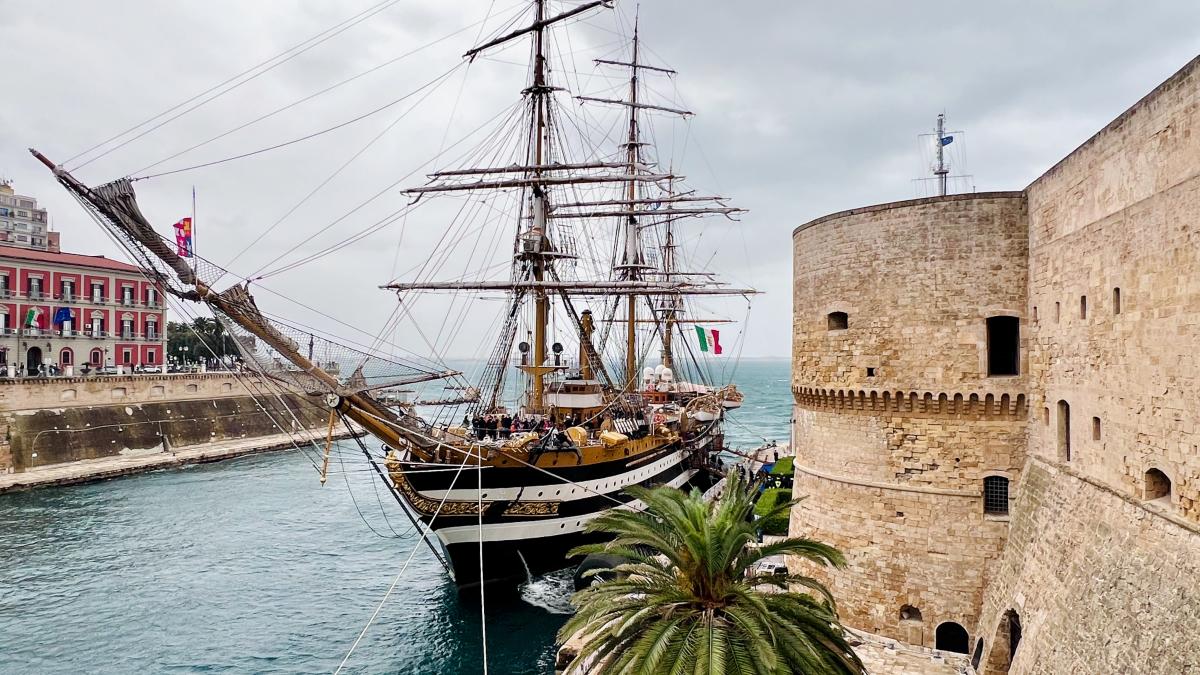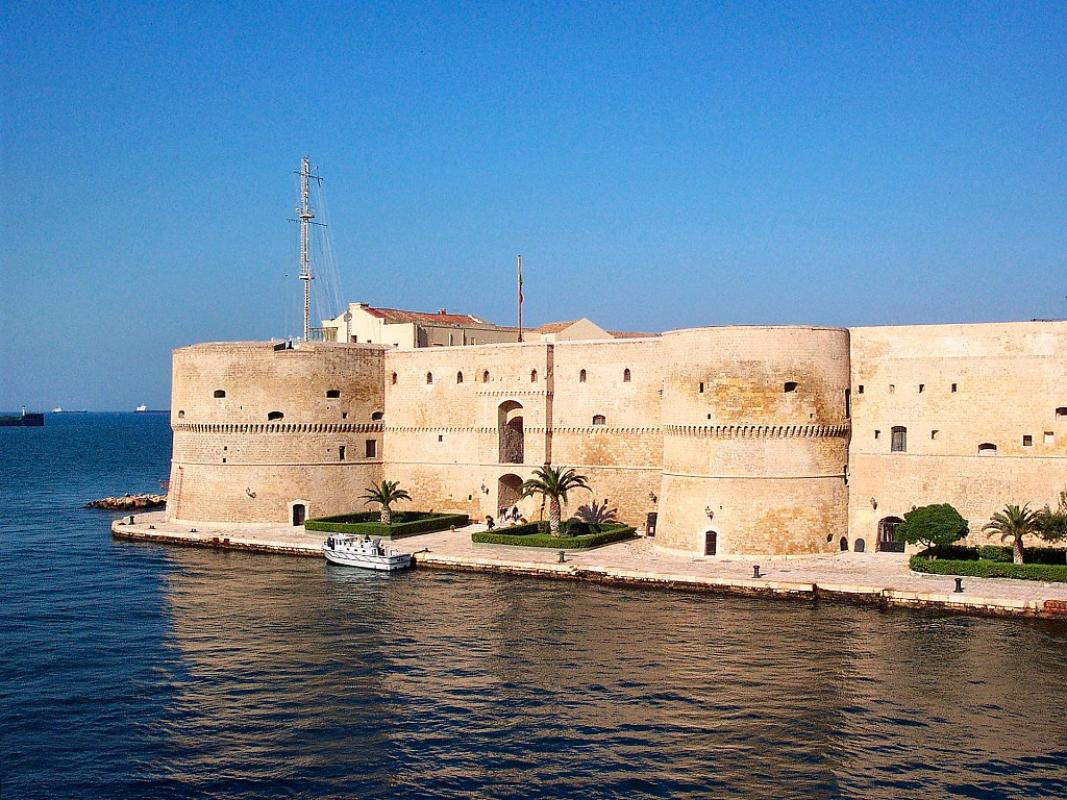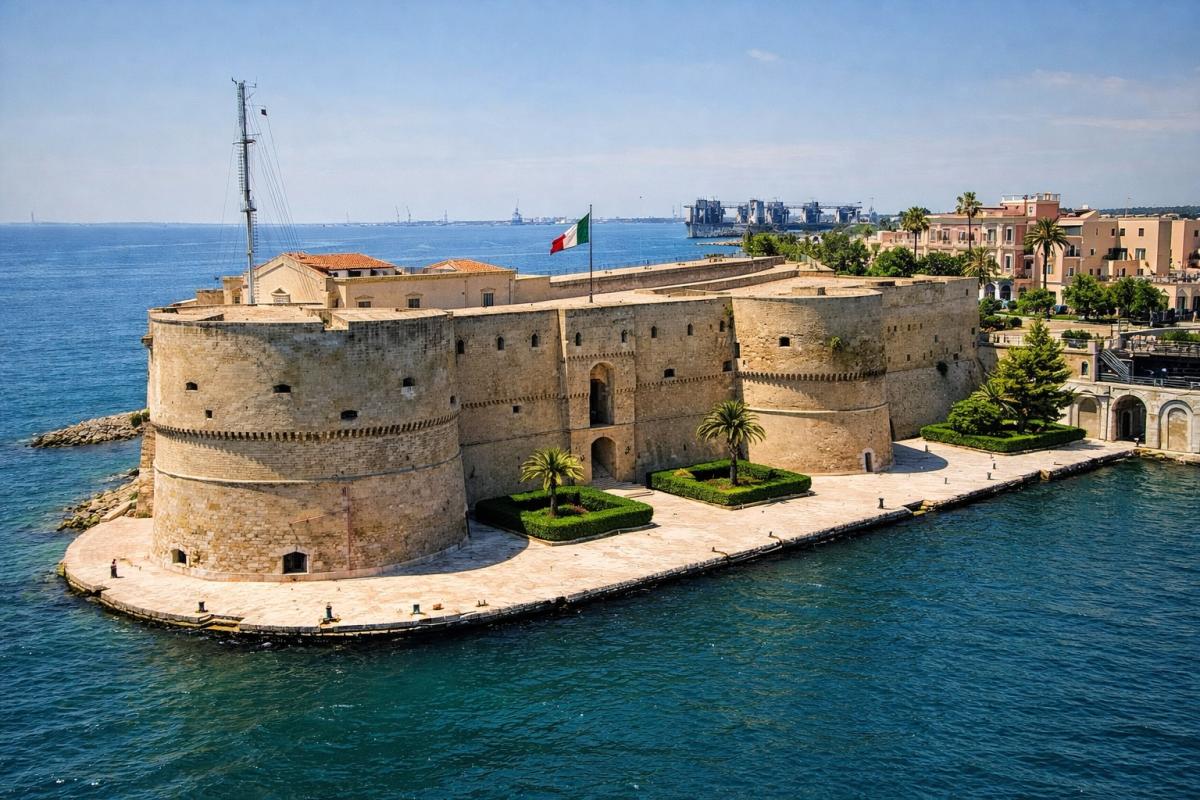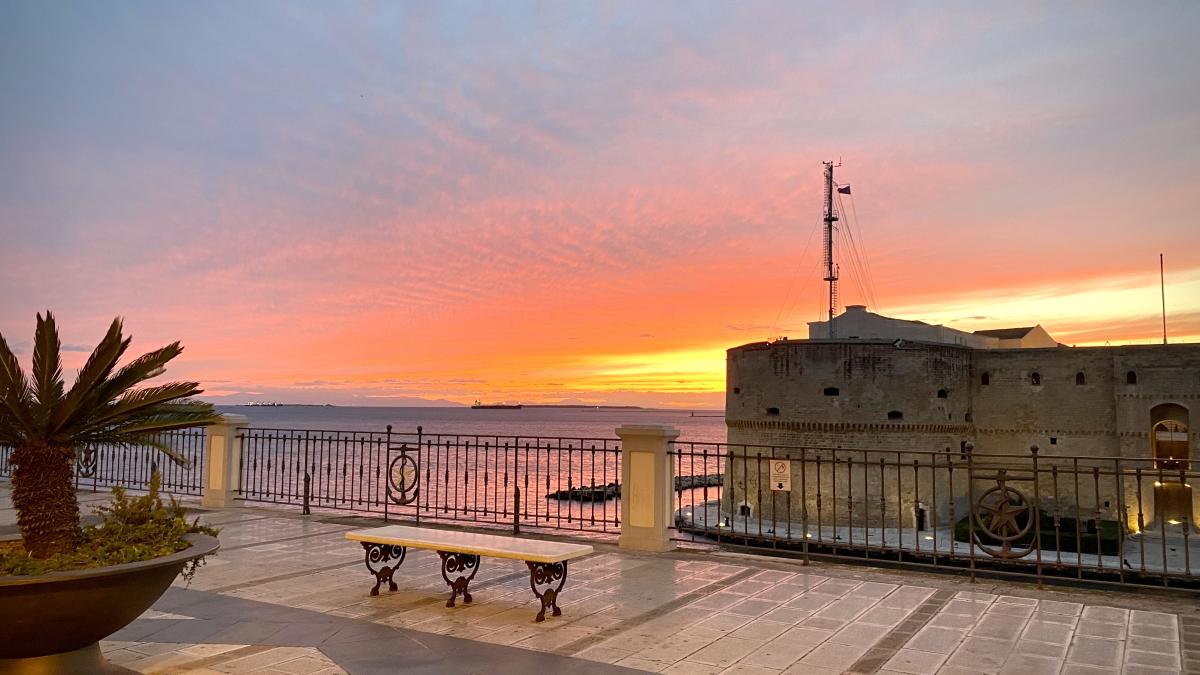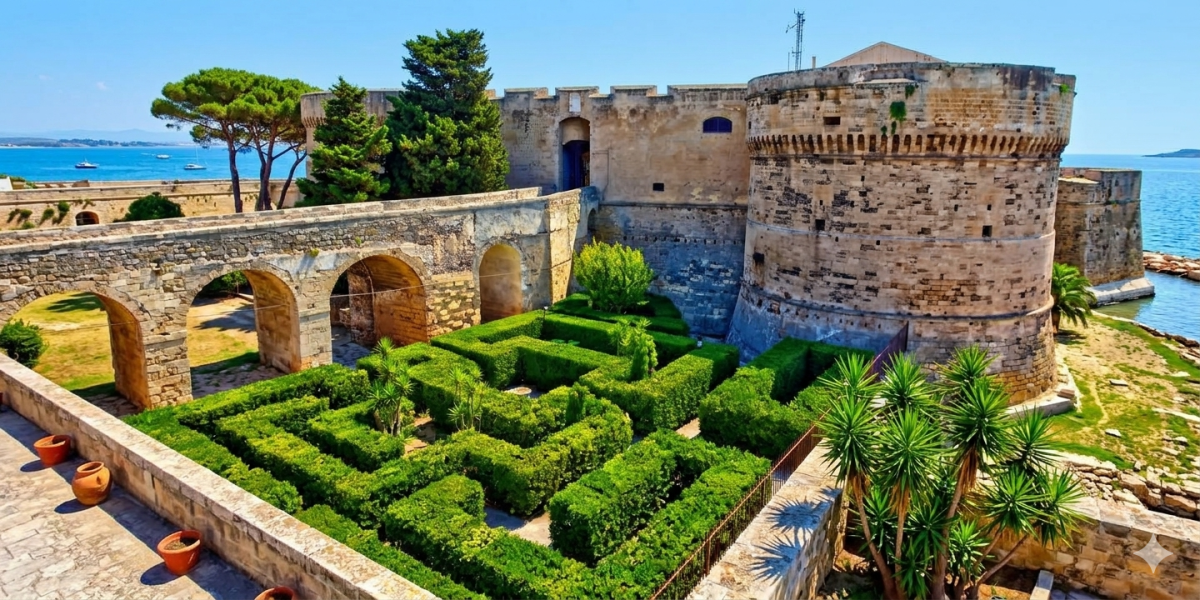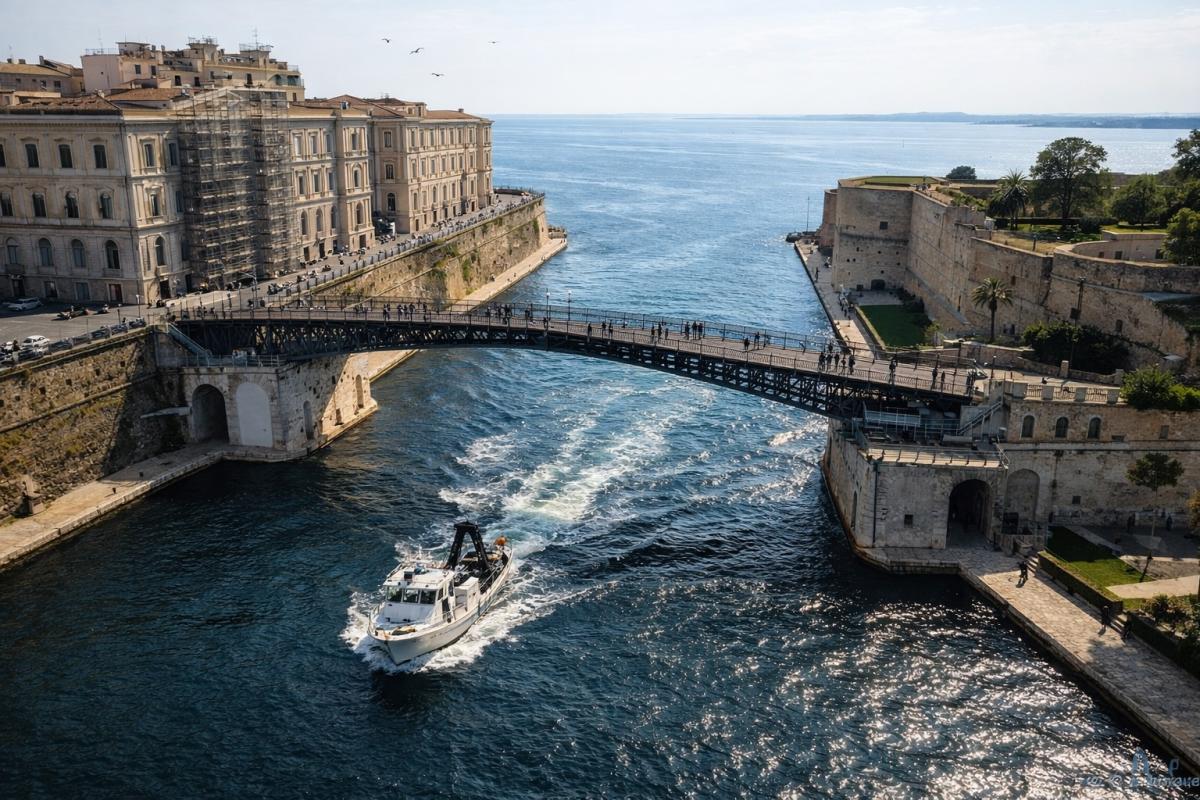
The Aragonese Castle of Taranto, also known as Castel Sant'Angelo, is one of the main icons of the city and is located at the entrance of the old town, between Mar Grande and Mar Piccolo, next to the Girevole Bridge....Read more
The Aragonese Castle of Taranto, also known as Castel Sant'Angelo, is one of the main icons of the city and is located at the entrance of the old town, between Mar Grande and Mar Piccolo, next to the Girevole Bridge. The fortress, with its mighty cylindrical towers, bastions, walkways, and underground spaces, bears witness to the evolution of military architecture between the Middle Ages and the Renaissance. The present appearance dates mainly to the late 15th century when the Aragonese transformed it into a modern stronghold suitable for the use of artillery, built on older Byzantine, Norman, and Swabian structures. Over the centuries, it has served defensive, military, and port control functions, deeply intertwining with Taranto's strategic history in the Mediterranean. Today, the castle is the headquarters and garrison of the Italian Navy, which oversees its preservation and also makes it an important cultural and tourist site. It can be visited through guided tours, typically free of charge and organized by the Navy, during which visitors can explore courtyards, towers, historical rooms, archaeological finds, and charming views of the sea and the old town. The visit is highly recommended to understand the connection between Taranto, the sea, coastal defense, and its historical identity.
Read less