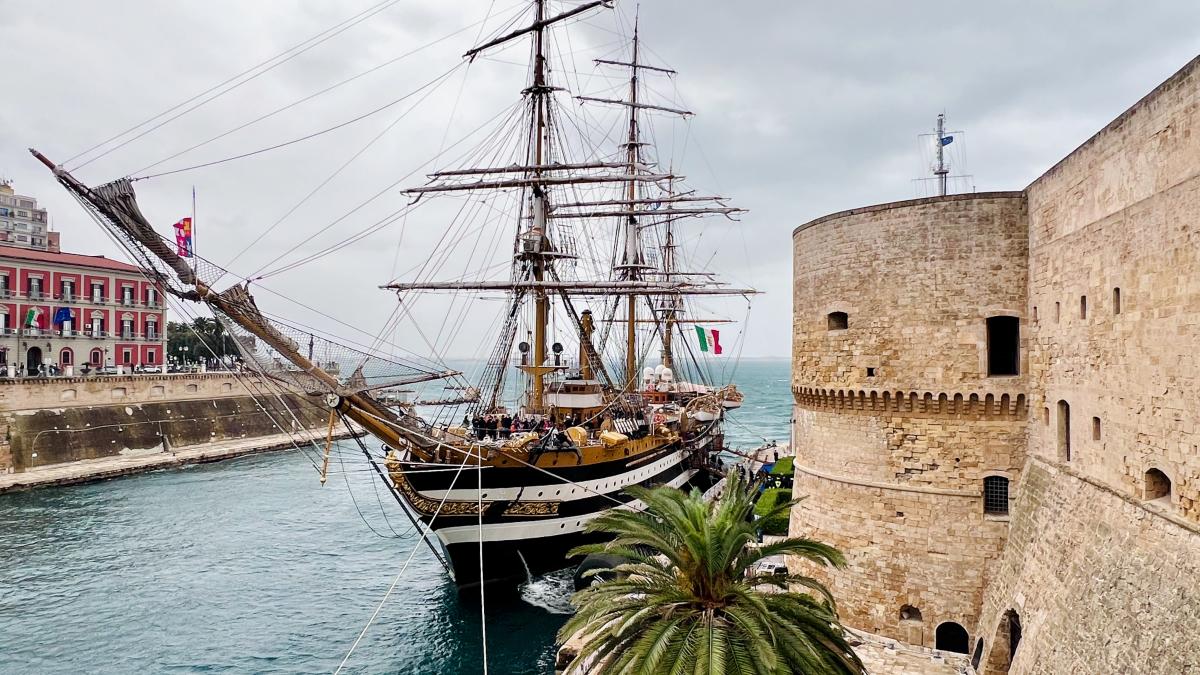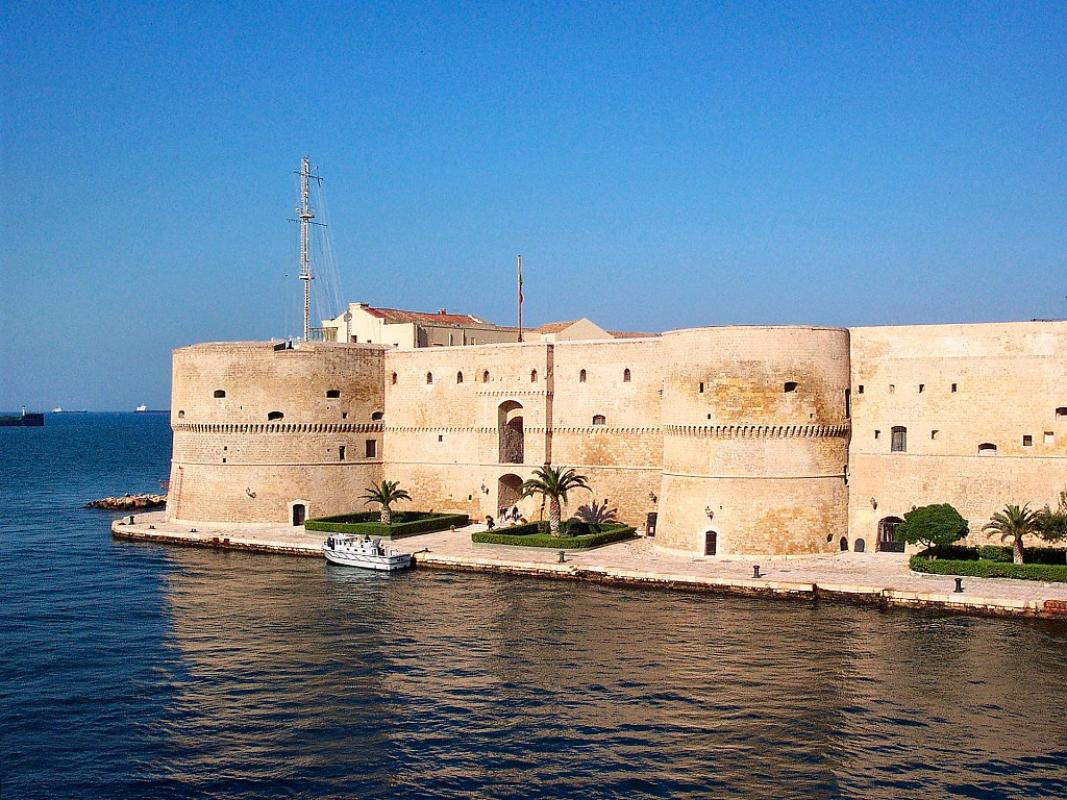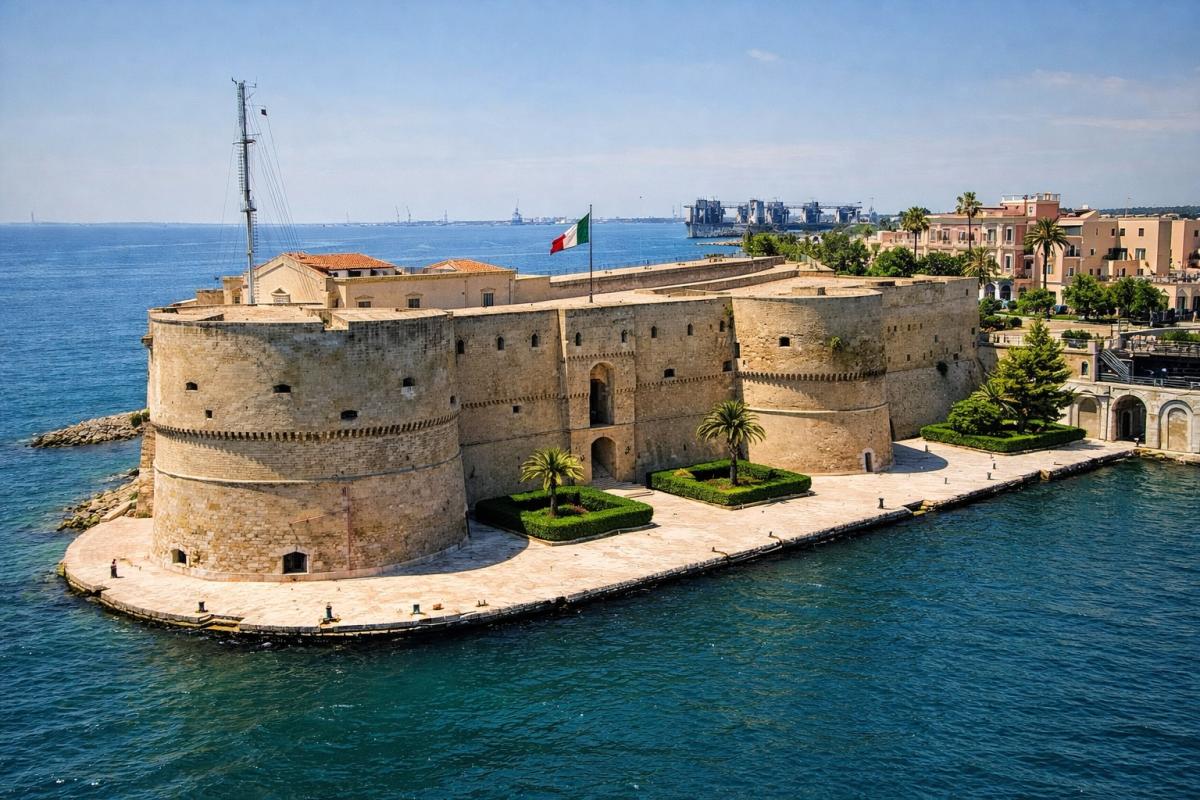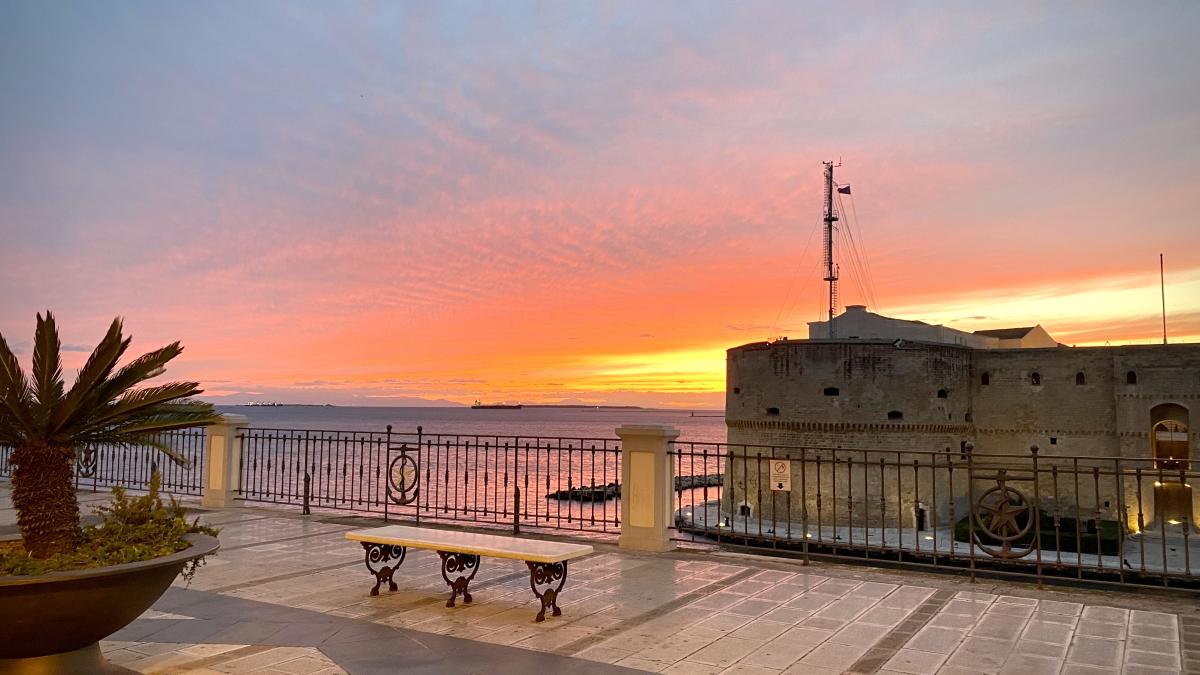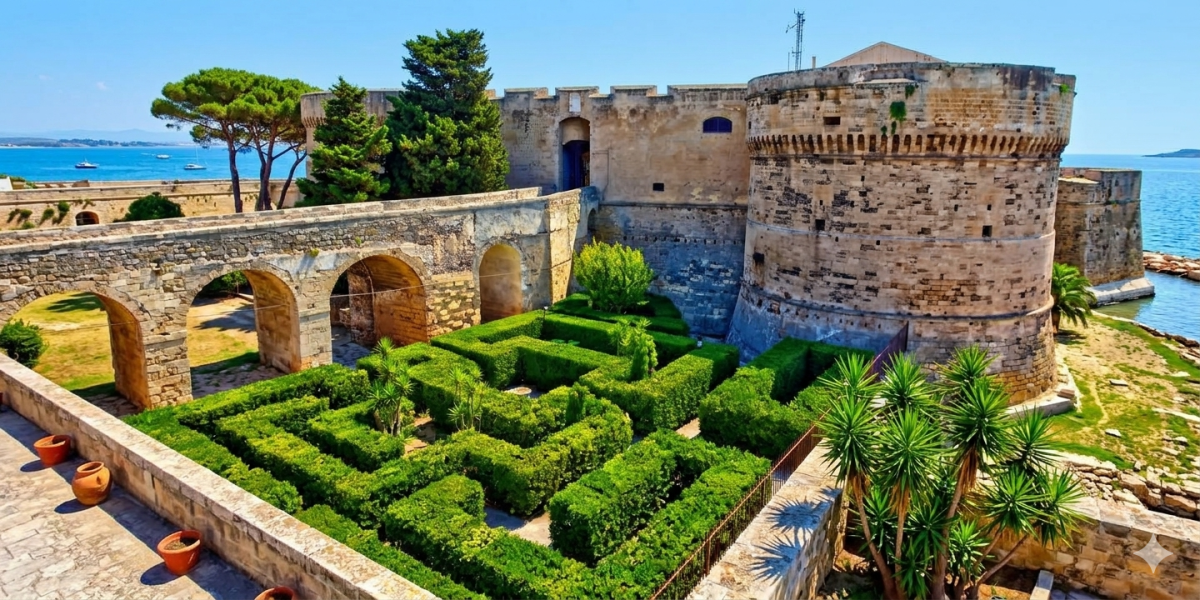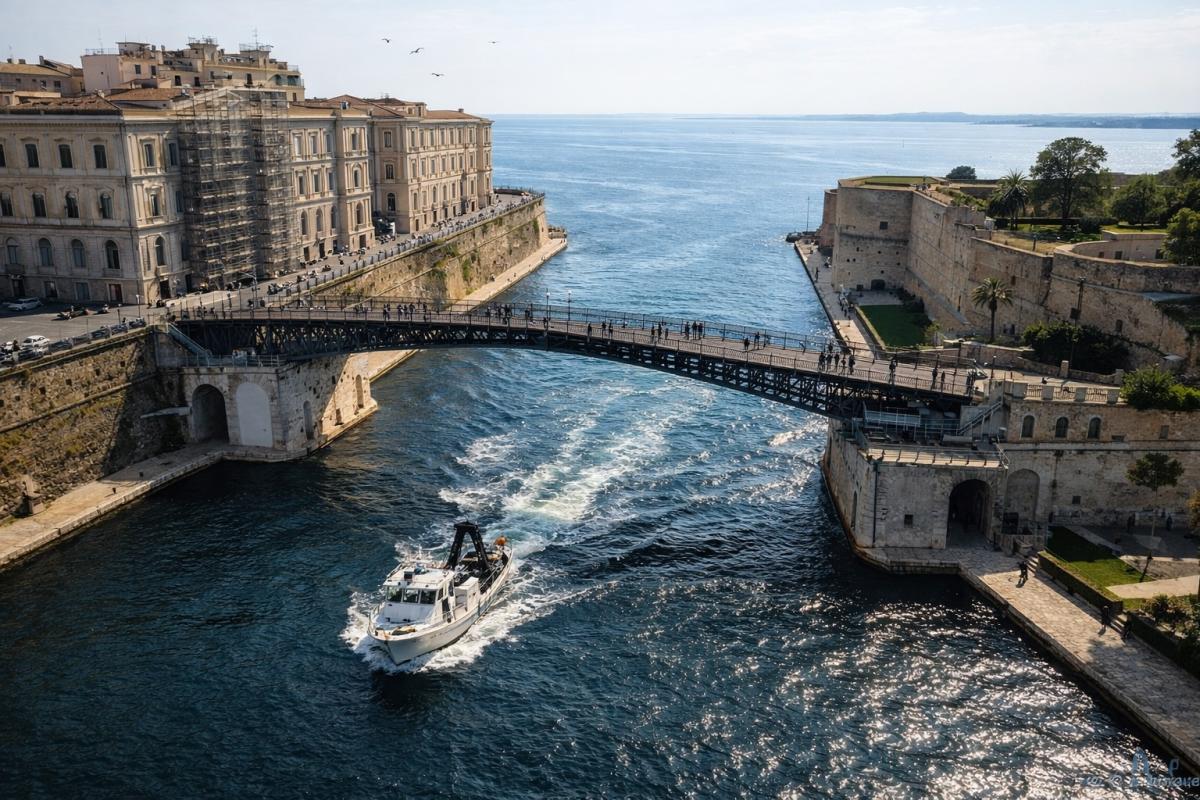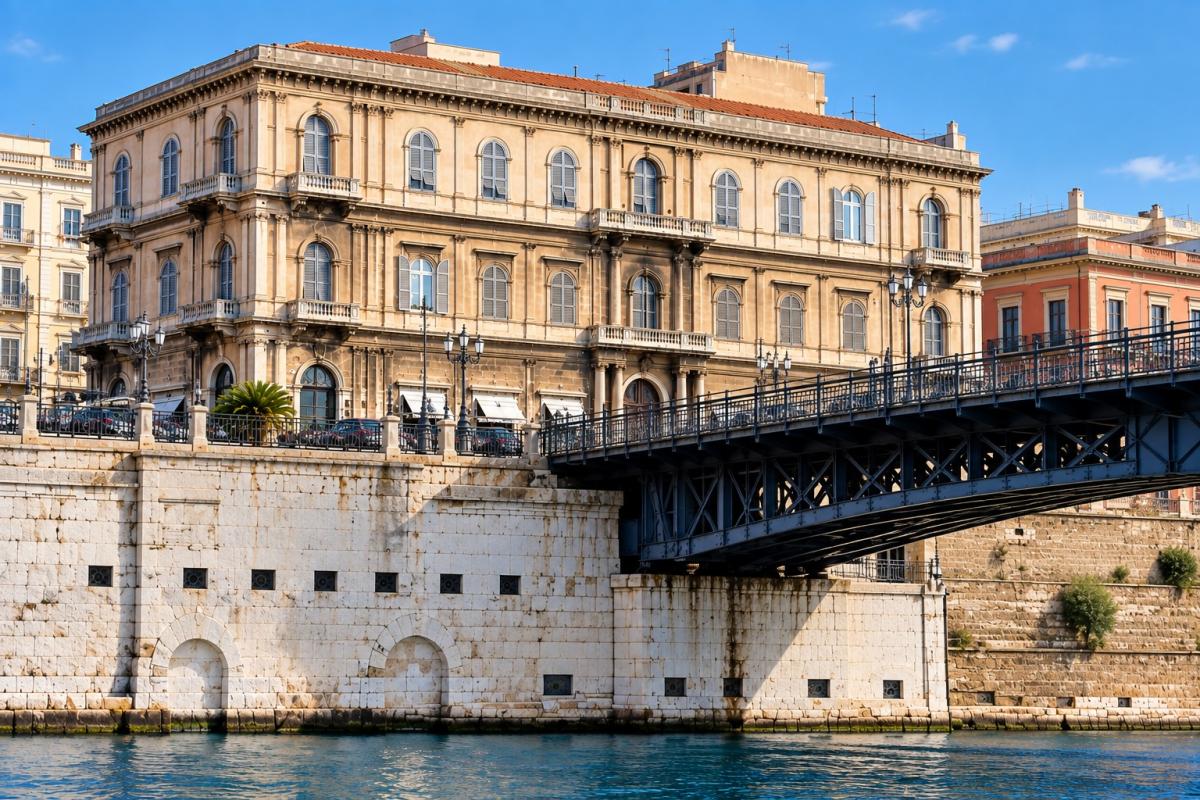
The Aragonese Castle of Taranto, also known as Castel Sant'Angelo, dominates the southern end of the island of Borgo Antico, next to the Navigable Canal and the famous Swing Bridge. It is a powerful Renaissance fortress with a quadrangular plan, organized around a large central courtyard and characterized by very thick walls, internal walkways, galleries, and cylindrical towers designed to withstand artillery....Read more
The Aragonese Castle of Taranto, also known as Castel Sant'Angelo, dominates the southern end of the island of Borgo Antico, next to the Navigable Canal and the famous Swing Bridge. It is a powerful Renaissance fortress with a quadrangular plan, organized around a large central courtyard and characterized by very thick walls, internal walkways, galleries, and cylindrical towers designed to withstand artillery. The current building was rebuilt between 1487 and 1492 by the will of Ferdinand I of Aragon, in response to the evolution of firearms and the new defensive needs of the Kingdom of Naples. The project is traditionally linked, directly or indirectly, to the Sienese architect Francesco di Giorgio Martini. The fortress replaced a medieval Norman-Swabian-Angevin castle, which in turn was built on Byzantine structures and testimonies of the Greek era: during visits, traces of these different phases are visible, narrating almost three thousand years of the city's history. Of the original five towers, San Cristoforo, San Lorenzo, dell'Annunziata, and della Bandiera remain; the tower of Sant'Angelo was demolished in 1883 for the construction of the Swing Bridge. Once equipped with numerous overlapping firing positions, the castle played an important military role, also in defense against Ottoman attacks. Over time, it was also used as a barracks and prison: tradition remembers among the prisoners Alexandre Dumas' father. Inside, there is the Renaissance chapel of San Leonardo, linked by tradition to the marriage between Maria d'Enghien and Ladislaus of Durazzo. Since 1883, the complex has been guarded by the Italian Navy, which has promoted its restoration and archaeological research, bringing to light historical environments and structures. Today, the Aragonese Castle is both a naval base and one of the main cultural and tourist attractions of Taranto. It is visitable through guided tours, generally by appointment, which allow visitors to learn about the defensive architecture, underground spaces, artifacts, and historical layers of the monument.
Read less