More Info
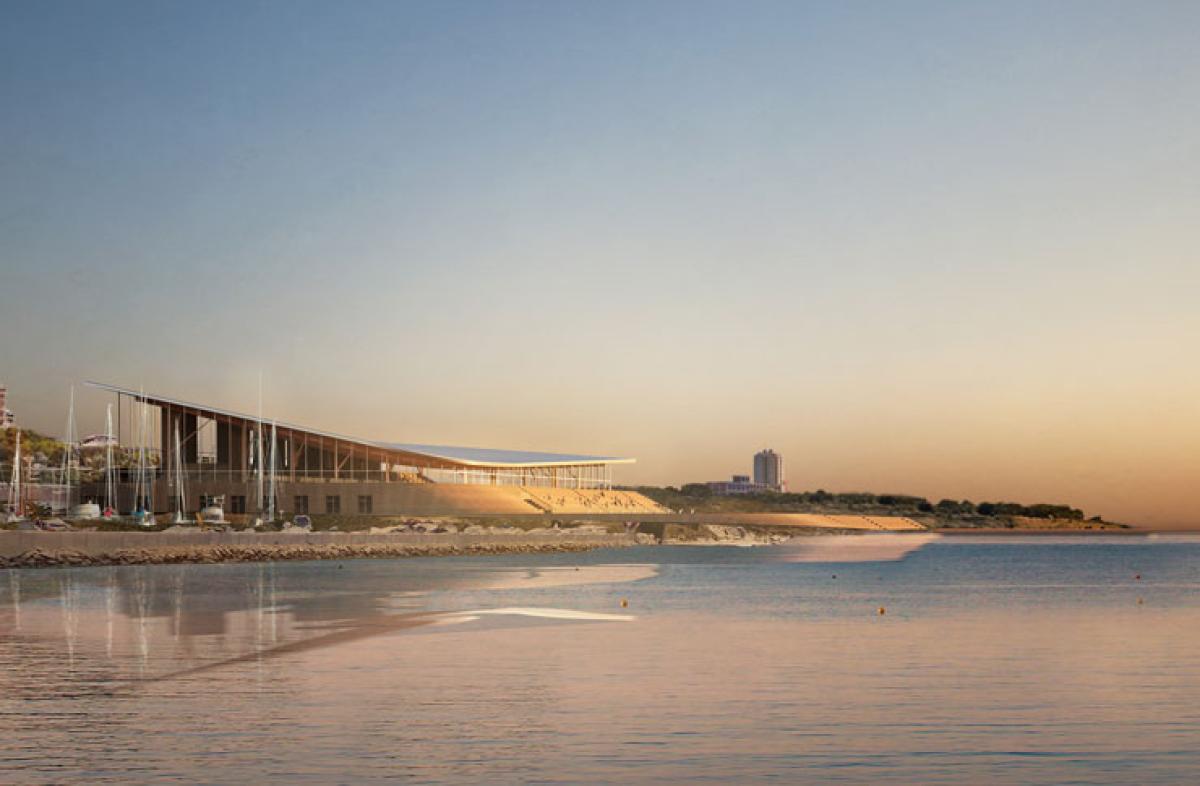
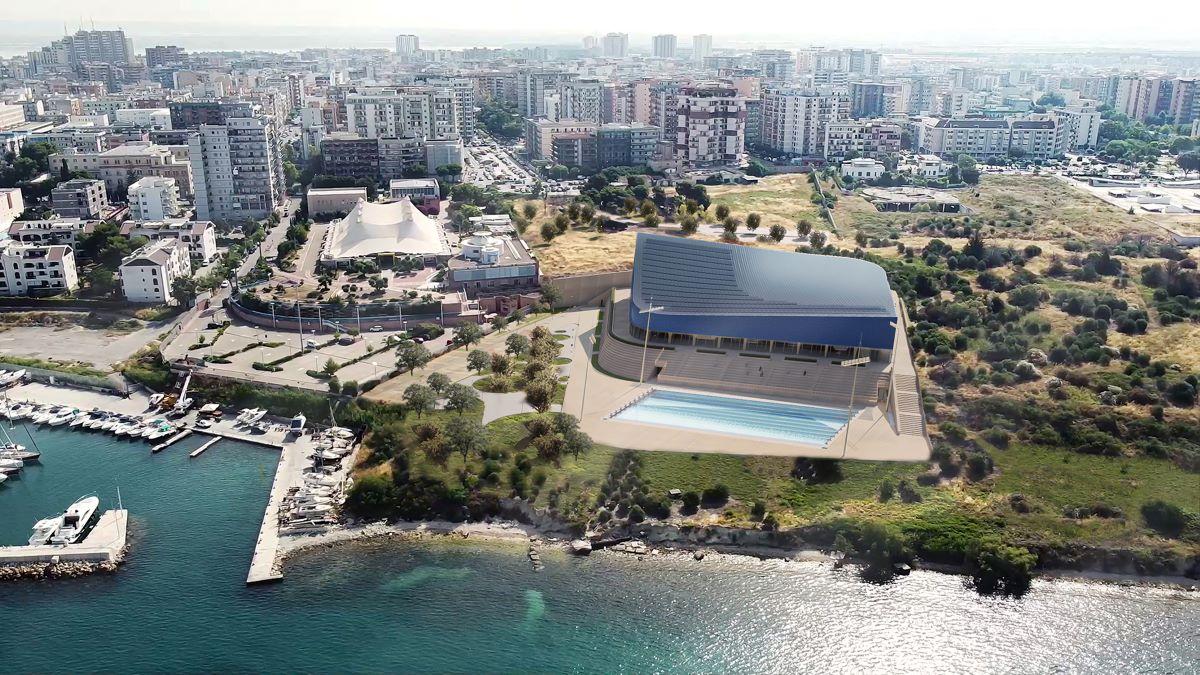
The new Torre d’Ayala Swimming Stadium is located on the waterfront of Taranto, along Viale Virgilio, near the historic Torre d’Ayala and overlooking the Mar Grande. It is one of the most important infrastructures built for the XX Mediterranean Games Taranto 2026 and aims to become a new reference point for competitive swimming and the enhancement of the Taranto waterfront.
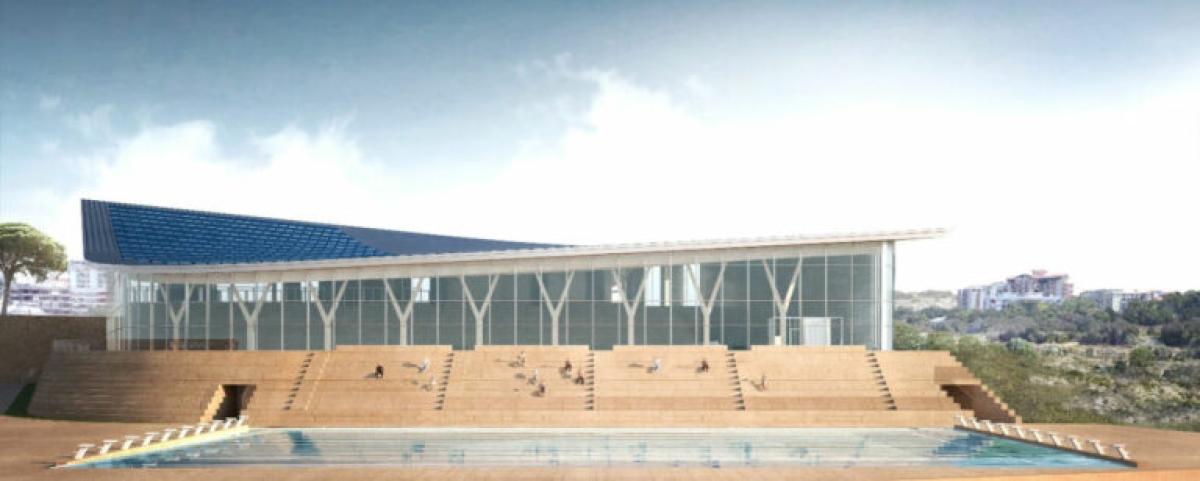
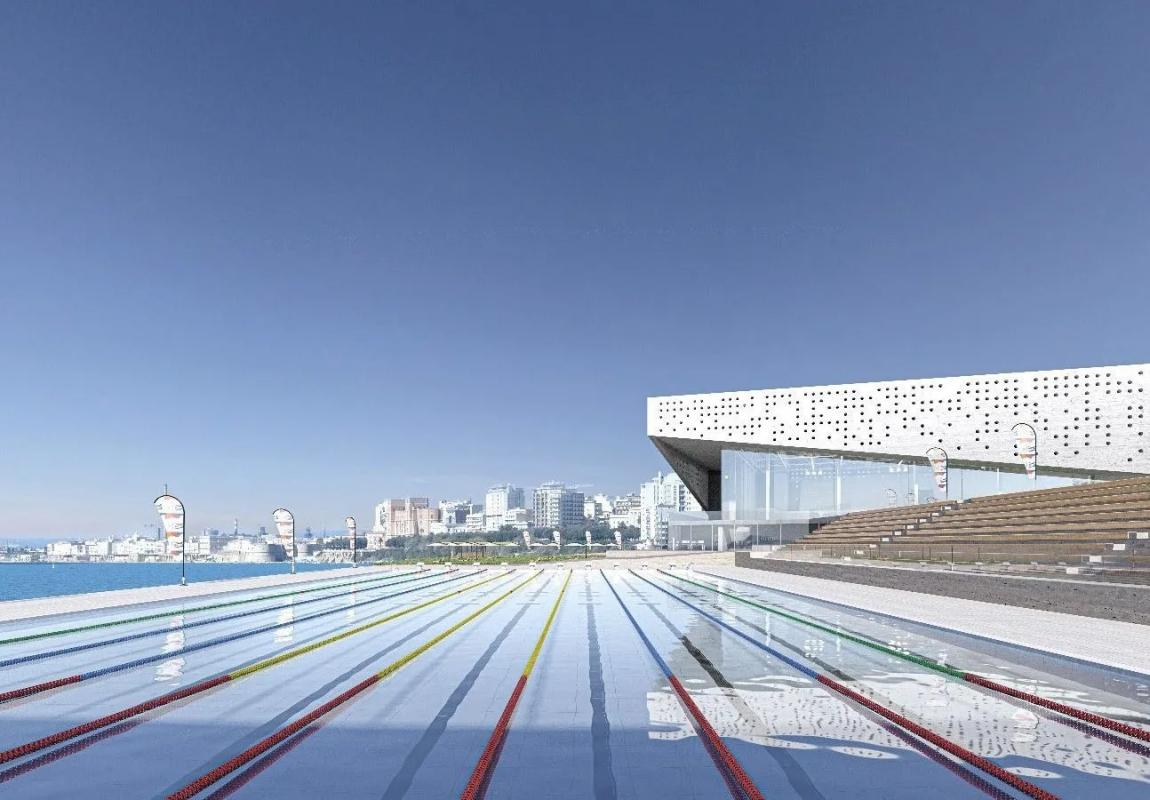
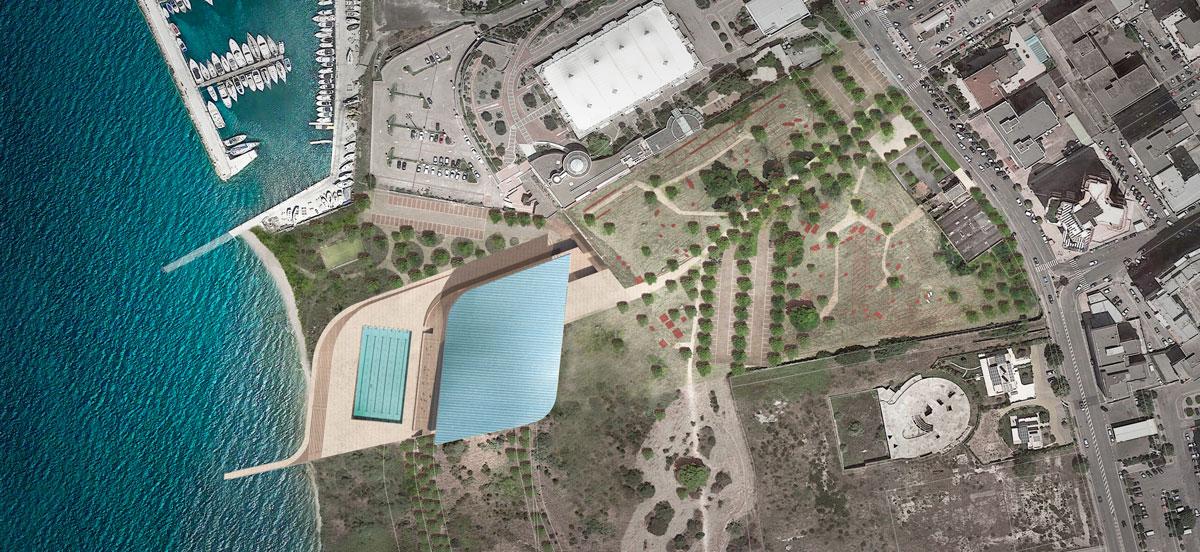
The complex covers an area of about 9,000 m² and includes two 50-meter pools, one indoor and one outdoor. The indoor pool measures 50 × 25 meters, with a variable depth between 2 and 3 meters; the outdoor one measures approximately 51.5 × 21 meters, with a depth of 2 meters. The grandstands can accommodate around 2,000 spectators in total, with approximately 980 seats serving the indoor pool and around 1,000 for the outdoor pool.
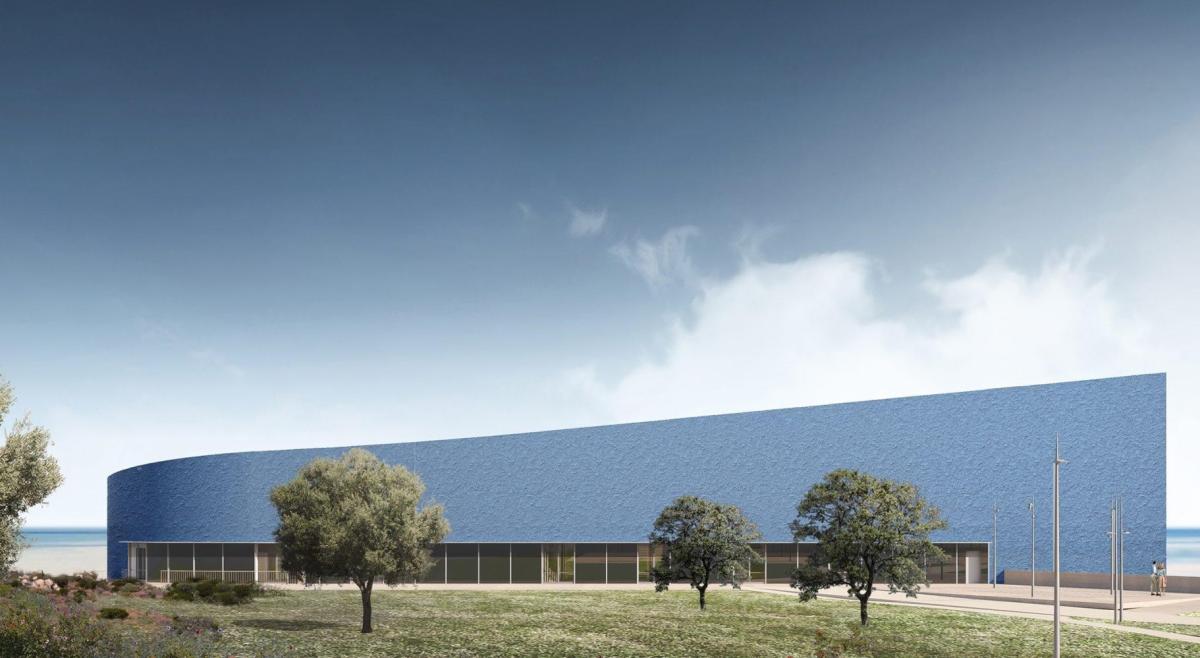
From an architectural point of view, the building takes advantage of the terrain's conformation, characterized by a significant slope between the road and the sea. The project configures the stadium as a sort of "bridge-building", articulated on three levels sloping towards the coast. This solution integrates the architecture into the landscape and, at the same time, creates a direct visual relationship between the pools, the sea, and the profile of the Taranto coast.
Special attention has also been given to the redevelopment of a previously unused coastal area. The project is part of a broader intervention to enhance the Torre d’Ayala area, which also includes the protection of the archaeological evidence in the upper part of the site and the future enhancement of the historic tower and archaeological area.
The facility is designed according to Olympic standards and is intended to host swimming and water polo competitions, as well as sports and recreational activities. Its seaside location is also intended to create a particularly strong relationship between sports, landscape, and the city's identity: already in the design phase, it was emphasized how the building should become a recognizable piece of waterfront architecture, visible even from the sea.